Physicians’ Day at the Capitol 2026
Dr. Vera Prisacari advocated for mental health parity at the Physicians’ Day at the Capitol, as well as for increased Medicaid funding and renewal of telehealth services reimbursement.
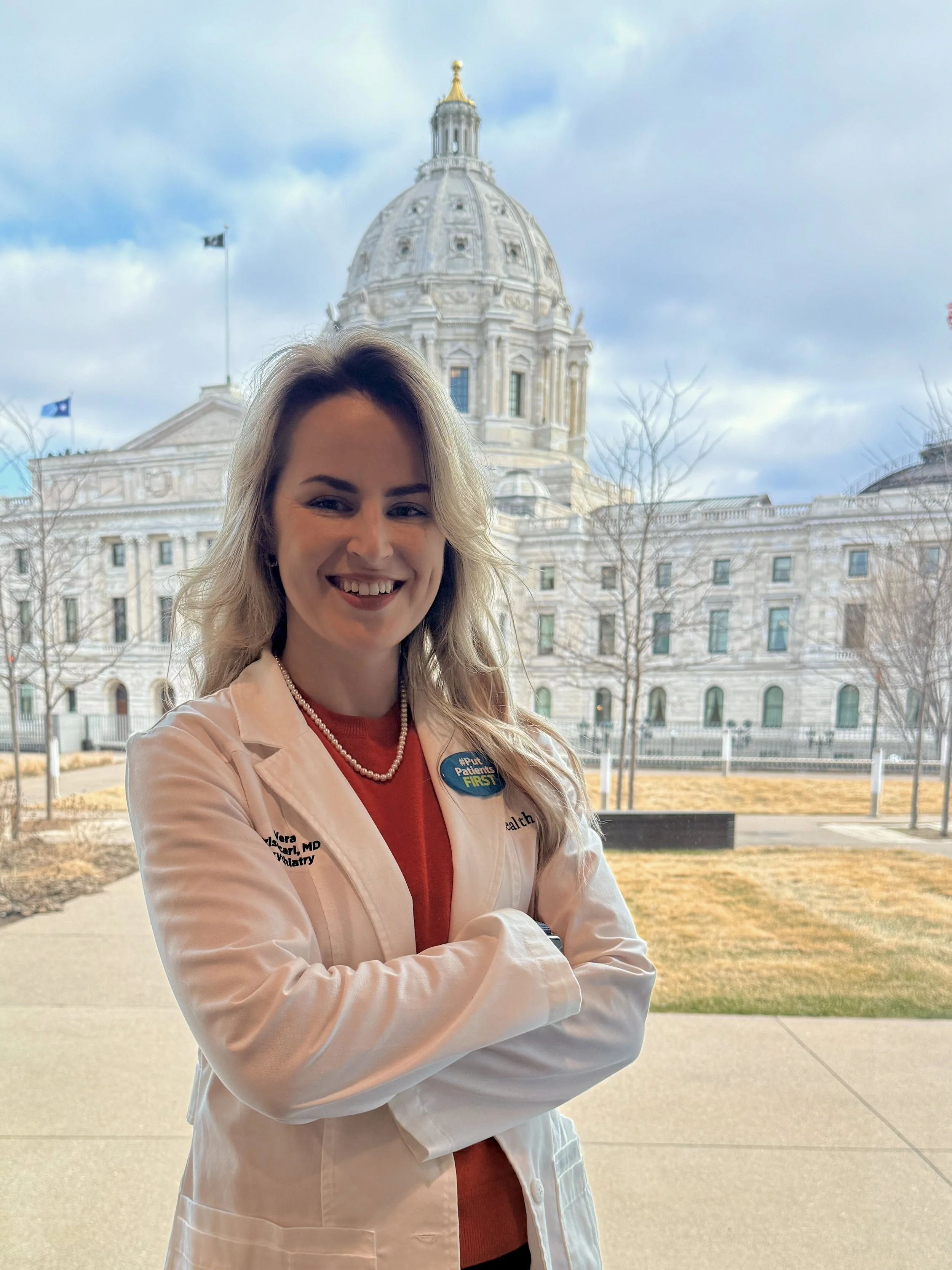
Showing up to advocate on behalf of my patients. #PutPatientsFirst
Mental Health Parity Enforcement
“Strengthen oversight and enforcement of mental health parity laws so that coverage for mental health and substance use disorders is truly equal to physical health coverage.”
-Minnesota Psychiatric Society Position and Legislative Update 2026
Why don’t we have more psychiatrists in network with insurance companies?
● In-network psychiatric appointments are difficult to obtain.
● Out-of-network behavioral health use is far higher than for medical care.
● Psychiatric reimbursement remains 40 to 60 percent lower than comparable primary care.
● Behavioral health clinicians face greater prior authorization and administrative burden.
What this means:
By contracting with insurance companies, psychiatrists are signing up for lower reimbursement rates and additional administrative burdens, which include prior authorization requests and drug formulary substitutions.
It’s no wonder that truly excellent psychiatrists that care for their patients and the care that they provide are leaving the insurance network and running private pay cash practices.
Unfortunately, this contributes to even worse in-network wait times.
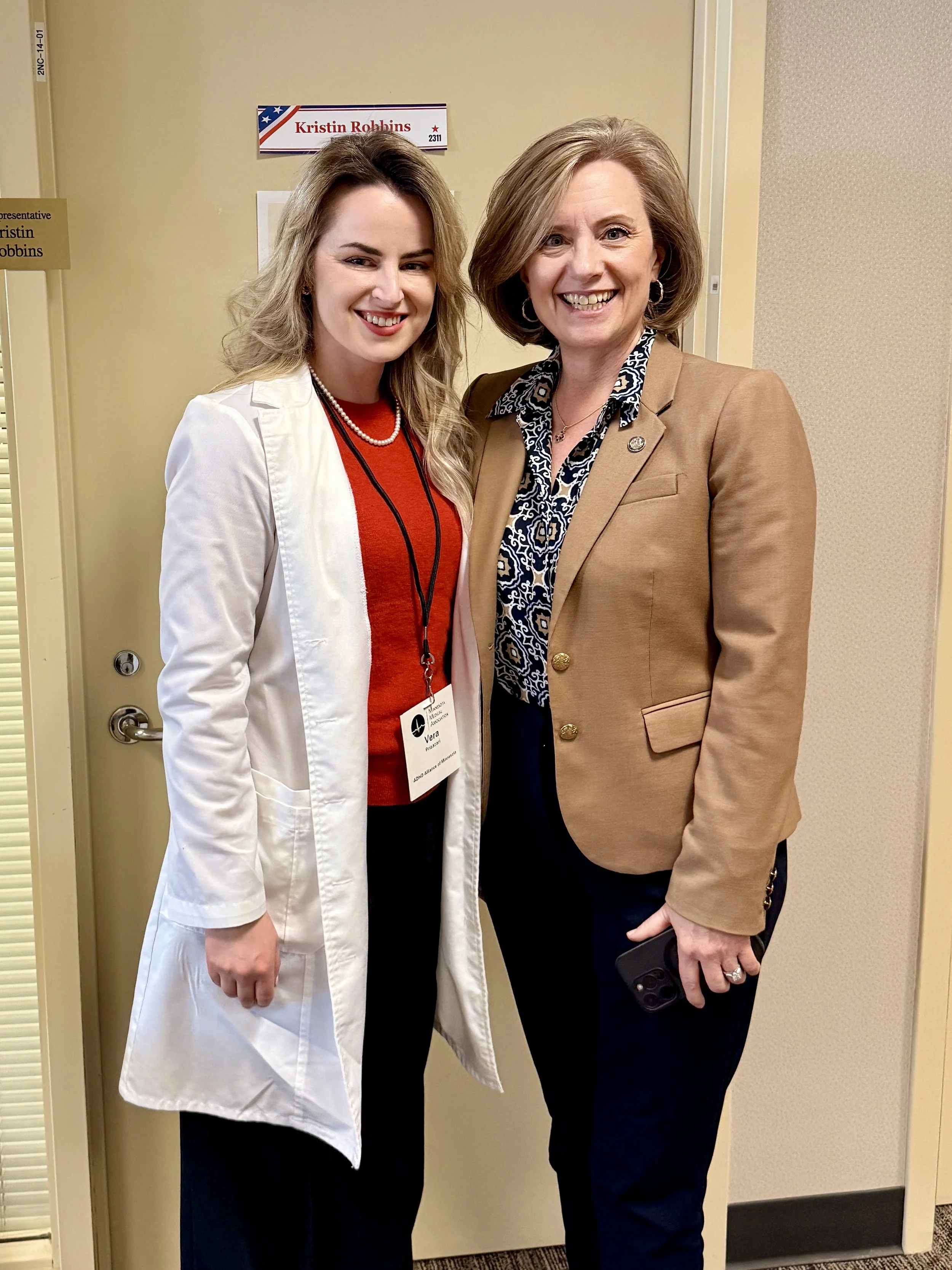
Meeting with Rep. Robbins to discuss mental health parity law enforcement.
My story/personal experience:
I used to work at a large medical practice in California that accepted both commercial and Medicare insurance plans. Here is what I learned:
-By accepting insurance, I would have an overall lower hourly rate (due to lower insurance reimbursements) and therefore be forced to work longer hours and have a larger patient panel.
-In addition, I would face an increased administrative burden due to requests/demands from insurance companies, such as choosing alternative medication prescriptions or requiring completion of additional prior authorizations in order to approve coverage for medications.
After 3 years, I could feel it wearing on my empathy and connection with patients. I was worried what it would do to me over the next 30 years.
“I was headed for burnout and leaving my career in medicine. I decided to be out of network of insurance companies in order to save my career.”

Dr. Prisacari with Senator Limmer and other physicians at the Minnesota State Capitol.
So it’s not that there are no psychiatrists practicing in Minnesota, there are just not enough psychiatrists in network with insurance companies in Minnesota. Contracting with insurance companies is an arduous process. Once complete, physicians receive secretive reimbursement rates that non-disclosure agreements prohibit us from disclosing to colleagues, preventing negotiation. And that’s just the beginning of a contractual agreement of accepting their lower reimbursement rates, in exchange for access to their patient network.
At the end of the day, as physicians, we want to be there for our patients, but insurance companies make it not only more burdensome, but also less profitable. We must enforce mental health parity laws so that private practice psychiatrists receive comparable reimbursement. This will incentivize quality psychiatrists to stay in-network with insurance companies and pass along the savings to our patients.
Bottom Line
While I do not contract with insurance companies at this time, if reimbursement rates improve, or administrative burdens decrease, I may reconsider. For now, my services and fees are available here. I strive to provide the highest quality care that my patients deserve and at this time that is incompatible with insurance-based coverage.